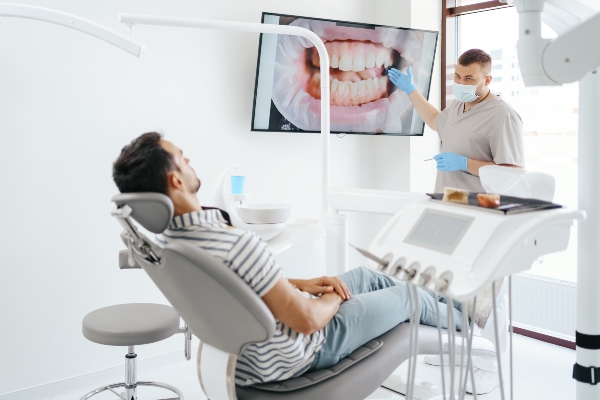
 Keeping your smile healthy is easy with the help of a general dentist. They provide comprehensive examinations to help determine your specific needs. This can include strengthening the teeth through preventative services or correcting an issue. Learning what each service entails will help you determine when it is necessary to schedule a visit.
Comprehensive examinations
The American Dental Association, or ADA, recommends individuals begin receiving biannual appointments as soon as their first tooth erupts or at least by 12 months of age. However, frequency may vary for those with underlying medical conditions that impact their immune system and oral cavities, such as diabetes or periodontitis (advanced gum disease). These appointments involve the general dentist taking X-rays, performing physical examinations, in-depth cleanings, root scaling, and reviewing areas that need improvement if necessary.
X-rays
A general dentist usually takes a patient's X-rays once every two years, but this can vary depending on changes in the patient's oral health. They help the dentist view the jaws, inner structures of the teeth, and gums to ensure no abnormalities, such as decay or infections, are developing.
Physical assessments
Physical assessments involve the general dentist using a small mirror, a sickle probe, and a periodontal probe to ensure the external layers of the teeth and gums are free of abnormalities. Unlike X-rays, which are performed every few appointments, general dentists perform physical appointments every appointment.
In-depth cleanings
A dental hygienist will perform in-depth cleanings to remove plaque and tartar. Plaque is an easily-removable, bacteria-filled substance that accumulates on the surface of the teeth throughout the day and night. Left unremoved with proper oral hygiene techniques, it turns into tartar—hardened plaque. Patients cannot remove tartar. It requires the dental hygienist to perform a scaling procedure, a painless process that scrapes tartar from the surface of the teeth.
Preventative services
Preventative services are typically recommended after comprehensive examinations. Their primary aim is to strengthen or protect teeth from decay or trauma. Common preventative services include dental sealants, fluoride treatments, and splints or mouth guards.
While dental sealants and fluoride treatments are actual procedures, albeit quick and painless, splints and mouth guards are oral appliances that help patients with bruxism. Bruxism is a condition that causes significant wear on the teeth due to teeth grinding and clenching.
Corrective services
Corrective services are necessary when decay, infection, or trauma causes damage. Their primary aim is to restore the function, health, and protection of the overall mouth, whether that be addressing threats to teeth or soft tissues. Common corrective procedures include dental fillings, crowns, dental bridges, root scaling and planning, and root canals. Depending on the number of teeth causing the threat, it is possible for all these services to be needed. However, one or two of these services are more often included in a care plan.
Call us today
A general dentist can help keep your smile healthy with custom care plans. If it is time for a checkup or you have concerns about your smile, contact us today. We can schedule a comprehensive evaluation to determine the most effective care for your needs.
Request an appointment or call Alan S. Levy, DDS at 818-668-9055 for an appointment in our Tarzana office.
Related Posts
Most people know that a general dentist can treat basic dental problems like cavities and tartar buildup and help you keep your smile healthy. However, besides cleanings, checkups, and other treatments, these professionals also offer smile repair services. If missing teeth, cracked teeth, or dental stains affect how you feel about your smile, a general…
If you are struggling with chronic bad breath, also known as halitosis, you are not alone, and your general dentist can help. The first step to fresher breath is understanding the causes of bad breath and how to talk to your dentist. A general dentist can help you determine what is causing your halitosis and…
Your general dentist can determine the cause of your tooth sensitivity. This dental issue may come from various factors. A visit to the dentist can help get you the solution you need. Here are the details on when you must see your general dentist for your tooth sensitivity.Severe dental sensitivity can prevent an individual from…